Suffering Side Effects of Ozempic?
You Need Jerry

Ozempic has made headlines in recent years as a leading weight-loss drug, praised for being both effective and convenient. As its popularity has grown, the medication has also become more accessible to consumers, with an estimated 6% of U.S. adults currently using it.
Ozempic is once again in the news, but not for the same reasons as before. Serious legal action is now being taken against the manufacturer over reports of severe health complications linked to prolonged use of the drug for on and off-label reasons.
If you have experienced vision loss, gastrointestinal issues, or other health problems after taking semaglutide (Ozempic), you may be eligible to join a mass tort claim against the manufacturer. Contact our Kansas and Missouri personal injury lawyers today to share your story and begin your Ozempic lawsuit.
What is Ozempic?
Ozempic is the brand name for the active ingredient semaglutide, a medication belonging to the broader glucagon-like peptide-1 (GLP-1) receptor agonist family. This class of drugs mimics the body’s natural GLP-1 hormone, which helps regulate blood sugar and appetite.
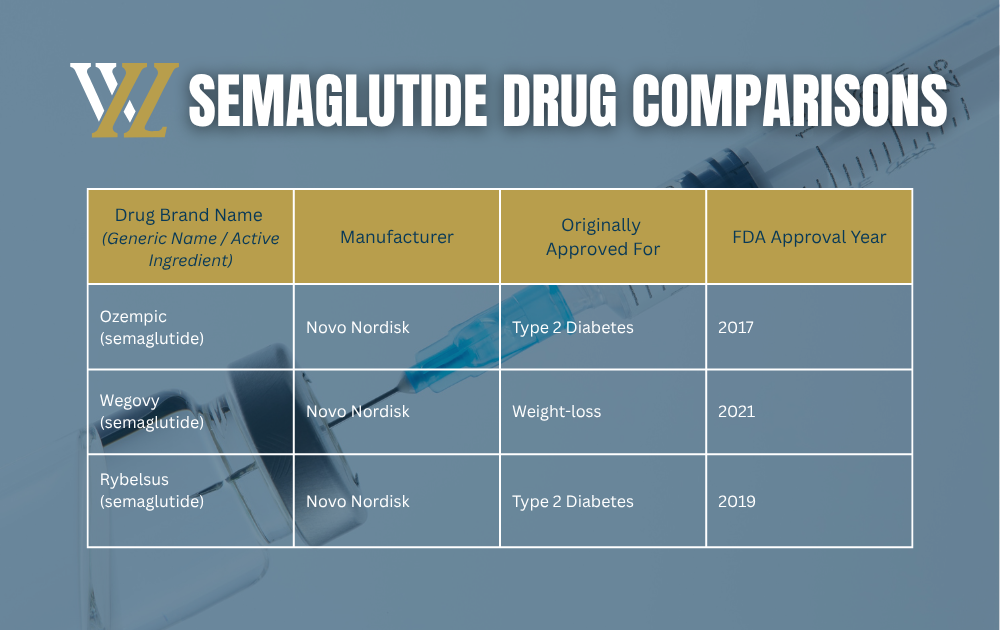
Ozempic was originally approved by the U.S. Food and Drug Administration (FDA) as a treatment for type 2 diabetes. Since its introduction by manufacturer Novo Nordisk in 2017, it has also become widely used for the off-label purpose of weight loss. While Ozempic itself is not FDA-approved for weight loss, physicians may still prescribe it for that purpose under their medical discretion.
The medication is typically administered by subcutaneous injection of 0.5 mg, 1 mg, or 2 mg once weekly. According to the drug’s official prescribing information, it should be used alongside a reduced-calorie diet and increased physical activity to achieve the best results.
Other Semaglutide Drugs
Novo Nordisk is also the manufacturer behind several other semaglutide-based medications. Because semaglutide may provide multiple health benefits, different brand names are used to address various conditions.
Other Novo Nordisk semaglutide medications include:
Wegovy
Wegovy is a prescribed 2.4 mg semaglutide injection approved for weight management and for reducing the risk of major cardiovascular events. It is intended to be used in combination with a reduced-calorie diet and increased physical activity.
Rybelsus
Rybelsus is a prescribed oral semaglutide tablet, available in 7 mg or 14 mg doses, designed to treat type 2 diabetes and related conditions. Similar to other semaglutide medications, it is recommended that Rybelsus be taken in conjunction with a healthy diet and regular exercise.
Why is There an Ozempic Lawsuit?
You may be asking yourself, Ozempic—and semaglutide in general—seems beneficial, so how could there be a lawsuit against such a helpful drug? While Ozempic has helped many individuals manage their type 2 diabetes and lose weight, others have allegedly experienced serious health complications after using the medication.
Plaintiffs across the country claim they developed conditions such as vision loss and gastrointestinal problems after taking Ozempic or other semaglutide products. They further allege that these risks were either not disclosed or were misrepresented on the drug’s warning label.
These allegations are partly supported by findings from major health organizations such as the World Health Organization (WHO) and the U.S. Food and Drug Administration (FDA). In June 2025, the WHO issued an alert regarding the potential risk of non-arteritic anterior ischemic optic neuropathy (NAION) associated with semaglutide use. Similarly, the FDA’s Adverse Event Reporting System (FAERS) has identified reports of intestinal obstruction and fecal impaction among Ozempic and other semaglutide users. The FDA is currently reviewing these reports to determine whether additional regulatory action is warranted.
Ozempic Multidistrict Litigation
In recent years, lawsuits involving Ozempic have been consolidated into a single multidistrict litigation (MDL) docket. This process allows for more efficient management of cases while ensuring that the outcome of each individual claim remains separate, unlike a class action lawsuit. The official title of the MDL is: MDL 3094 – In Re: Glucagon-like Peptide-1 Receptor Agonists (GLP-1 RAs) Products Liability Litigation. Ozempic is not explicitly mentioned in the title because the MDL includes other semaglutide medications as well.
The consolidation reflects the attention that both national health organizations and the legal system are giving to these claims. Wallentine Injury Law represents clients throughout Kansas City and across Kansas and Missouri and can assist with coordinating claims within the nationwide Ozempic MDL.
What Health Issues Are Related
to Ozempic?
Since its introduction, Ozempic has been associated with a range of health issues, some of which have prompted FDA investigations and updates to the drug’s warning label. Before examining these health issues in more detail, it is equally important to review the potential side effects and risks currently listed on Ozempic’s warning label:
- Pancreatitis
- Changes in vision
- Low blood sugar (hypoglycemia)
- Dehydration leading to kidney problems
- Severe stomach problems
- Serious allergic reactions
- Gallbladder problems
- Food or liquid entering the lungs during surgery under anesthesia or deep sedation
- Possible thyroid tumors, including cancer
For a complete list of potential side effects, visit Ozempic’s official website.
These side effects are current as listed on Ozempic’s official website. Experiencing one of these symptoms does not automatically qualify you for an Ozempic lawsuit because they were a pre-established risk. However, if you experienced a listed side effect in a more severe form, it may be worth consulting an experienced attorney at Wallentine Injury Law.
In addition to these recognized side effects, some users have reportedly experienced more serious health conditions, which are among the primary issues driving individual Ozempic lawsuits and the broader MDL.
Vision Loss – NAION
One of the more recently identified health concerns linked to Ozempic is vision loss, particularly Nonarteritic Anterior Ischemic Optic Neuropathy (NAION). NAION is characterized by sudden, typically painless vision loss and often occurs without warning signs.
Some studies suggest that semaglutide may affect blood flow to the optic nerve, potentially increasing the risk of NAION. A July 2024 study found that patients taking GLP-1 receptor agonists had a higher incidence of NAION compared with patients taking non–GLP-1 RA medications for similar conditions. Specifically, the cumulative incidence among type 2 diabetic semaglutide users was 8.9% versus 1.8% for non-GLP-1 RA users. Among overweight or obese semaglutide users, the incidence was 6.7% versus 0.8% for non-GLP-1 RA users. It is important to note that individuals with diabetes are already at a higher baseline risk for developing NAION.
While NAION is currently the most serious eye condition associated with semaglutide, other reported conditions include diabetic retinopathy, macular degeneration, papillitis, and paracentral acute middle maculopathy.
Blood Clots – Deep Vein Thrombosis
Ozempic has also been significantly linked in studies to the development of blood clots. While external clotting is a natural and necessary process that prevents excessive bleeding, internal blood clots can obstruct blood flow to vital organs and lead to serious medical complications.
One specific type of internal blood clot reportedly associated with Ozempic use is deep vein thrombosis (DVT). DVTs form in deep veins—most commonly in the legs—and may cause pain, swelling, or, in some cases, no noticeable symptoms at all. The primary danger occurs when a clot breaks free and travels to a vital organ, such as the lungs, where it can cause a potentially life-threatening pulmonary embolism.
A study published in the Journal of the American Heart Association found that “GLP-1 receptor agonists were significantly associated with an increased risk of DVT,” with the risk being higher among individuals who had taken a GLP-1 RA for longer than 1.5 years.
Stomach Issues – Gastroparesis
Perhaps more common than vision or blood-clotting complications, Ozempic has also been linked to gastroparesis, or paralysis of the stomach. This condition occurs when the stomach muscles fail to contract properly, slowing or even halting the movement of food through the digestive tract. As a result, the stomach may empty more slowly than normal—or, in severe cases, not at all.
Gastroparesis can range from mild to debilitating and, in some cases, may require hospitalization for pain management or the use of feeding tubes. While Ozempic and other semaglutide medications mention general stomach problems as potential side effects, critics argue that the severity of these complications—and the risk of gastroparesis specifically—has not been adequately disclosed.
Although gastroparesis has historically been associated with diabetes, ongoing reports suggest a possible link to semaglutide use as well. Individuals who developed gastroparesis after taking semaglutide may be eligible to pursue an Ozempic lawsuit.
Stomach Issues – Gastroenteritis
Similar to gastroparesis, gastroenteritis is another condition that can significantly impact digestive health and has been linked to Ozempic use. Commonly referred to as the “stomach flu” (though that term is medically inaccurate), gastroenteritis can result from exposure to viruses, certain medications, chemicals, or contaminated food or water.
Symptoms may include nausea, diarrhea, vomiting, stomach pain, and low-grade fever, among others. Unfortunately, there is no specific treatment for gastroenteritis, meaning it must generally resolve on its own. While many individuals recover without major complications, vulnerable populations—such as older adults and children—face a higher risk of dehydration and related health issues.
Other Potential Health Issues
The health risks outlined above are among the primary factors driving Ozempic lawsuits, largely due to their initial absence from semaglutide’s warning label. However, additional conditions may also give rise to a lawsuit under certain circumstances. Since Ozempic’s release, the FDA has updated the drug’s warning label several times to reflect newly identified risks associated with its use. These updates include:
- Ileus (intestinal obstruction) – added in September 2023
- Acute cholecystitis (gallbladder disease) – added in March 2022
- Intraoperative pulmonary aspiration – added in November 2024
- Pancreatitis and kidney injuries – added in January 2025
If you experienced any of these health issues in severe form, or before the warning label was updated to include them, you may be eligible to pursue an Ozempic lawsuit with our team.
Filing a Semaglutide – Ozempic Lawsuit in Kansas or Missouri

The health risks associated with Ozempic and other semaglutide prescription medications are serious and should not be overlooked. If you or a loved one used Ozempic and later developed a health condition that was not listed on the drug’s warning label or was not properly disclosed, you may be eligible to file an Ozempic lawsuit with Wallentine Injury Law.
During a free consultation, our experienced attorneys and paralegals will review your case to determine whether pursuing a claim is appropriate and in your best interest. If we take your case, our team will gather all relevant evidence such as medical records, prescriptions, and other documentation to connect your diagnosed condition to Ozempic use.
Contact our semaglutide, Ozempic lawsuit team today at 913-934-6333 or reach out to us online.
References
- American Academy of Ophthalmology and North American Neuro-Ophthalmology Society Issue Advice on Weight Loss Drug and Eye Health – American Academy of Ophthalmology
- April – June 2025 | Potential Signals of Serious Risks/New Safety Information Identified by the FDA Adverse Event Reporting System (FAERS) – FDA
- Gastrointestinal adverse events associated with semaglutide: A pharmacovigilance study based on FDA adverse event reporting system – Yamin Shu, et. al
- Gastroparesis – Mayo Clinic
- Glucagon‐Like Peptide‐1 Receptor Agonists and Risk of Venous Thromboembolism: A Systematic Review and Meta‐Analysis of Randomized Controlled Trials – Yiwen Liu, MD, et. al
- KFF Health Tracking Poll May 2024: The Public’s Use and Views of GLP-1 Drugs – KFF, Alex Montero, et. al
- K.S.A. 60-3302 – Kansas Legislature
- MDL 3094 In Re: Glucagon-like Peptide-1 Receptor Agonists (GLP-1 RAS) Products Liability Litigation – United States District Court, Eastern District of Pennsylvania
- Ozempic Lawsuit – Lawsuit Information Center, Ronald V. Miller, Jr.
- Ozempic Lawsuit – Motley Rice Attorneys at Law
- Risk of Nonarteritic Anterior Ischemic Optic Neuropathy in Patients Prescribed Semaglutide – JAMA Opthalmology
- RSMo 537.760 – Missouri Revisor of Statutes
- Tendency of Semaglutide to Induce Gastroparesis: A Case Report – Ahtshamullah Chaudhry, et. al
- The use of semaglutide medicines and risk of non-arteritic anterior ischemic optic neuropathy (NAION) – World Health Organization
- Viral Gastroenteritis (stomach flu) – Mayo Clinic